Date: 18.05.2025
Distance: 4 miles
Steps: 9150
Start: 11:50
Ground covered: Town centre and feeder streets
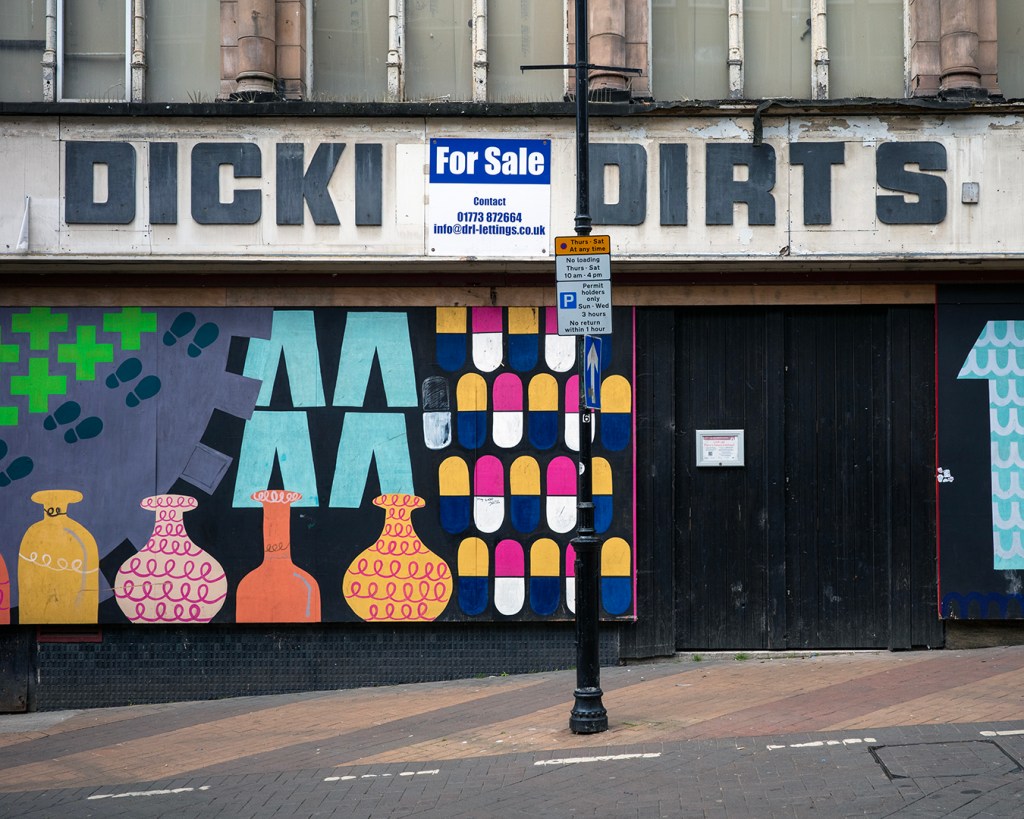
It’s been a while.
Four hours to kill in the East Midlands gave me time to visit a town I lived in for five years in the 1980s, exactly 40 years ago. The intention wasn’t nostalgia, but that naturally occurred as memories jarred and the distance of time brought personal questions about imagined realities.
Mansfield was not an overly poor town 40 years ago, but it was a stridently working class one. Mining unions had, rightly, won relatively good pay for the dangerous job of being a miner—the town’s primary industry. This afforded some the ability to live in larger houses than they may otherwise have been able to afford, yet there was still a pride in background and work—Thatcher’s ‘upwardly mobile’ rhetoric didn’t cut it around this town, Mansfield was nothing if not grounded in its roots.
Then came the 1984–1985 miners’ strike, the year of my O-Levels, and I witnessed the tensions this bought happening around me. It was the home of the breakaway Union of Democratic Mineworkers (UDM), which opposed the National Union of Mineworkers (NUM) strike. Mansfield was an odd place for a southerner like me in the 1980s—I was one of the few people in my school that supported the strike, sporting a Coal Not Dole sticker on my blazer and starting to get involved with leftist groups. I think I was seen as an eccentric outsider, which probably got me out of a lot of trouble.
But that’s all background.
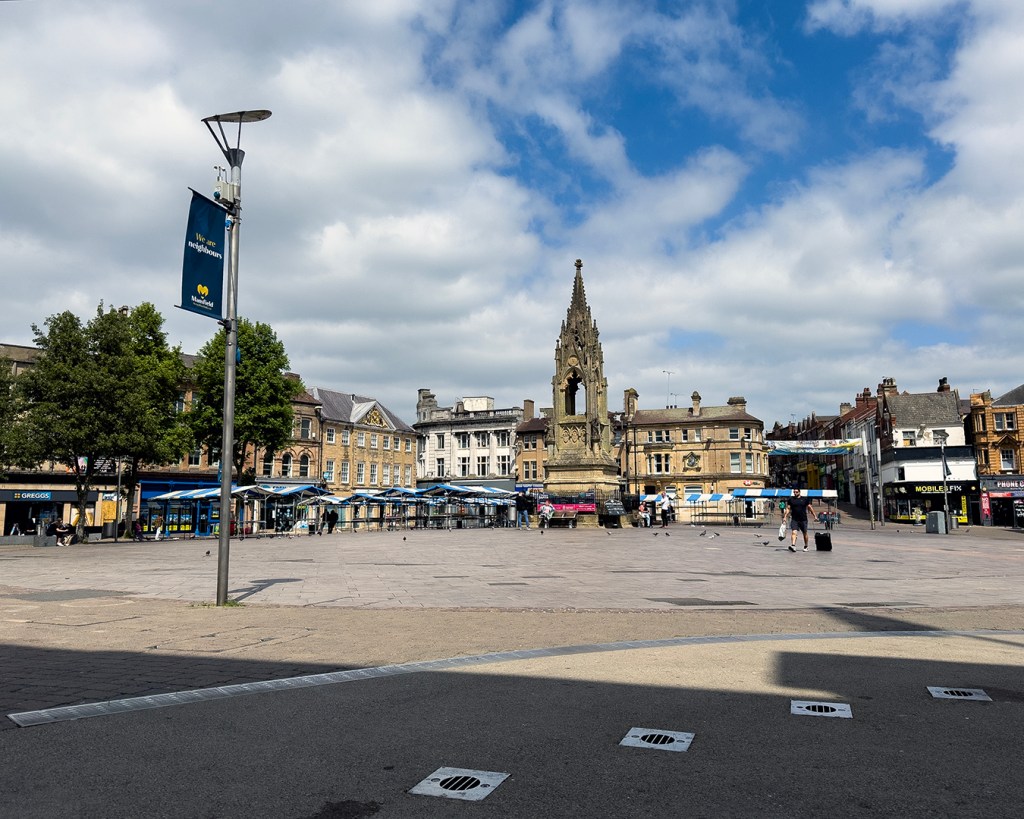
I had forgotten how impressive the market square was, as I sat on a bench drinking a coffee in the mid-May sun half-way through my walk. I started flicking through and over-analysing the photographs I had taken, and felt guilty that lots of the shots could be accused of being poverty porn—Mansfield had certainly seen better days, even in the 1980s.
I concluded they are what they are though. I shoot what my eyes are drawn too, and the point of this project is to explore, to discover, to document, to think. The market square seemed redeeming on this sunny day; people milled about and a group of young girls sat on, and danced around, the empty market stalls, blaring out music on their phones and having fun. It felt like there was still a heart to this town, a square shaped heart. The market place was far bigger than I remember—a large open space, a space with scope for all. The sun lit up the sand-coloured stone of the surrounding buildings, the vernacular I remember, showing off the heritage above the graphic adorned fascias.
But cast your eyes downwards—to the right of me a large betting shop, to my left a Greggs. On the other side of the square, two mobile phone repair shops.
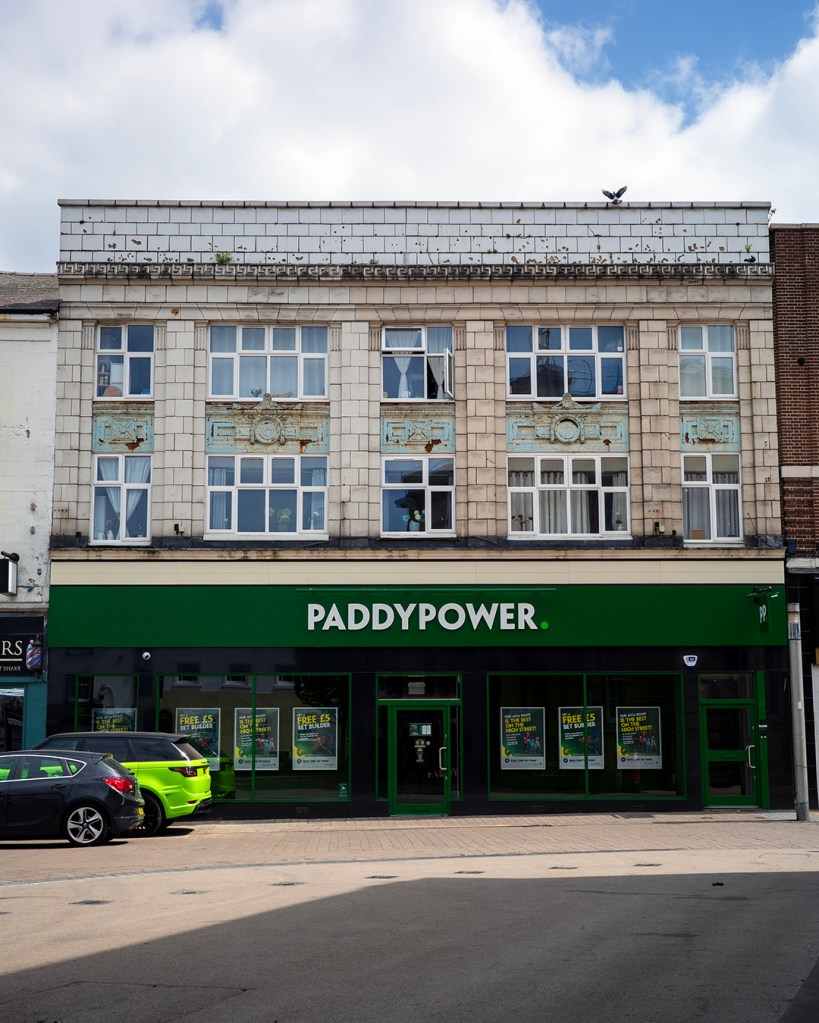
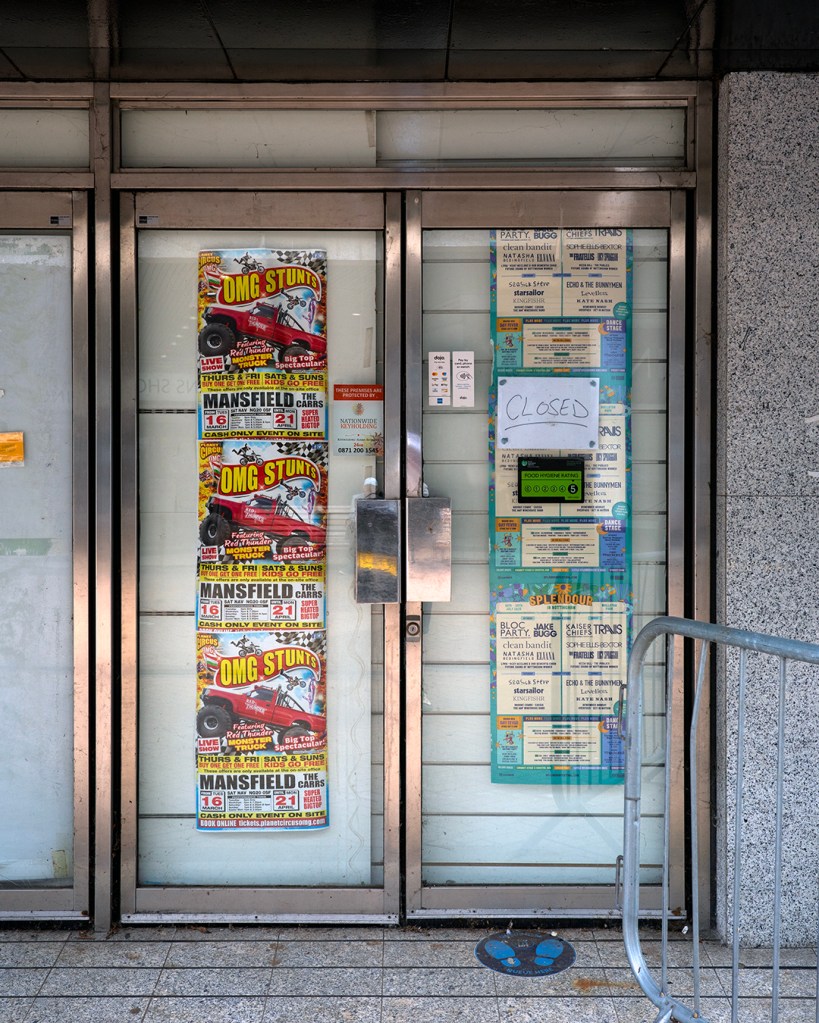
In the streets that channel people into the square there are boarded up shops, covered in flyposted adverts. Every other shop appears to be for fast food, or a convenience store, or a betting shop, or a discount store. Or slot machine shops, otherwise known as ‘adult gaming centres’. These are places of ‘entertainment’ I have only typically seen at seaside resorts, albeit alongside soft toy ‘grabby machines’ and ride on games, but Mansfield is almost as far from the sea as you can get in the UK.
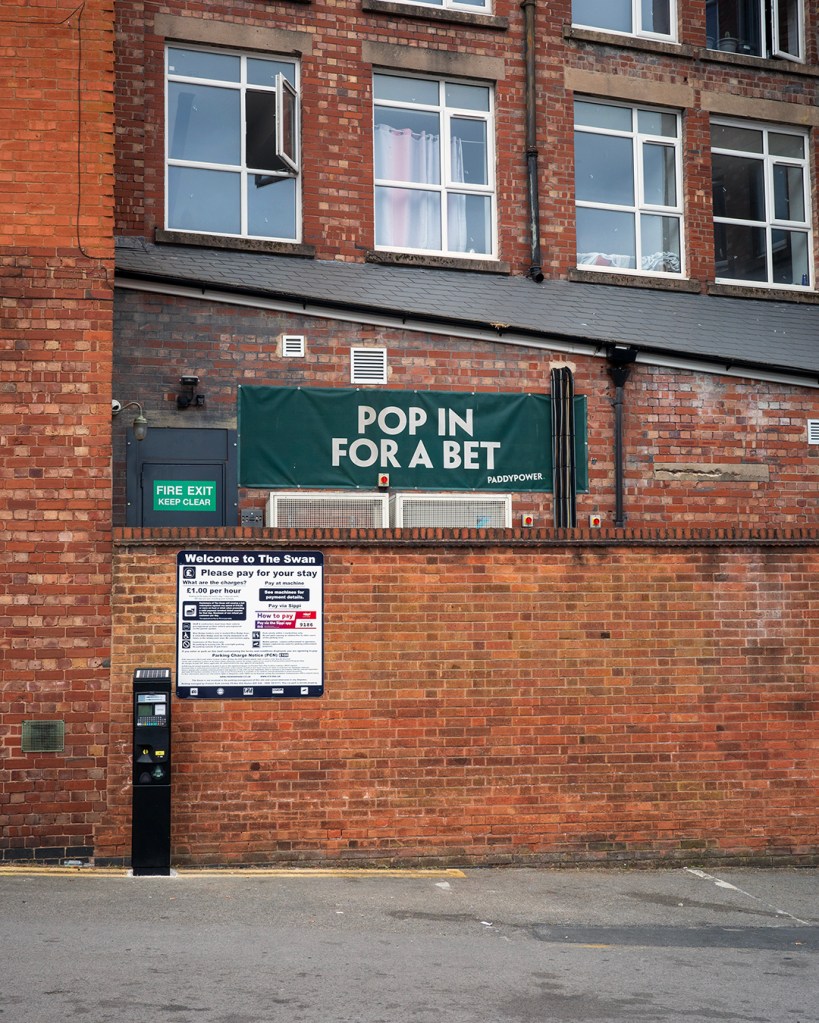
There was an irony that on the day of my visit, The Guardian ran a report that “slot machine companies are targeting Britain’s poorest neighbourhoods and channelling the proceeds to billionaire-owned corporations…” (2025, Rob Davis and Michael Goodier, The Guardian). In light of this, the shop fronts and the adverts for them provide the visual evidence of the financial challenges people are facing. And as you walk around, every other discontinued phone box has become an advertising hoarding for the very same shops, reminding you that you are never far away from a Greggs, a McDonalds or an adult gaming centre. A strange affair, as if the shop fronts themselves aren’t enough, there needs to be a phone box advert a few yards down the road covered with pictures of burgers and gambling machines on them.
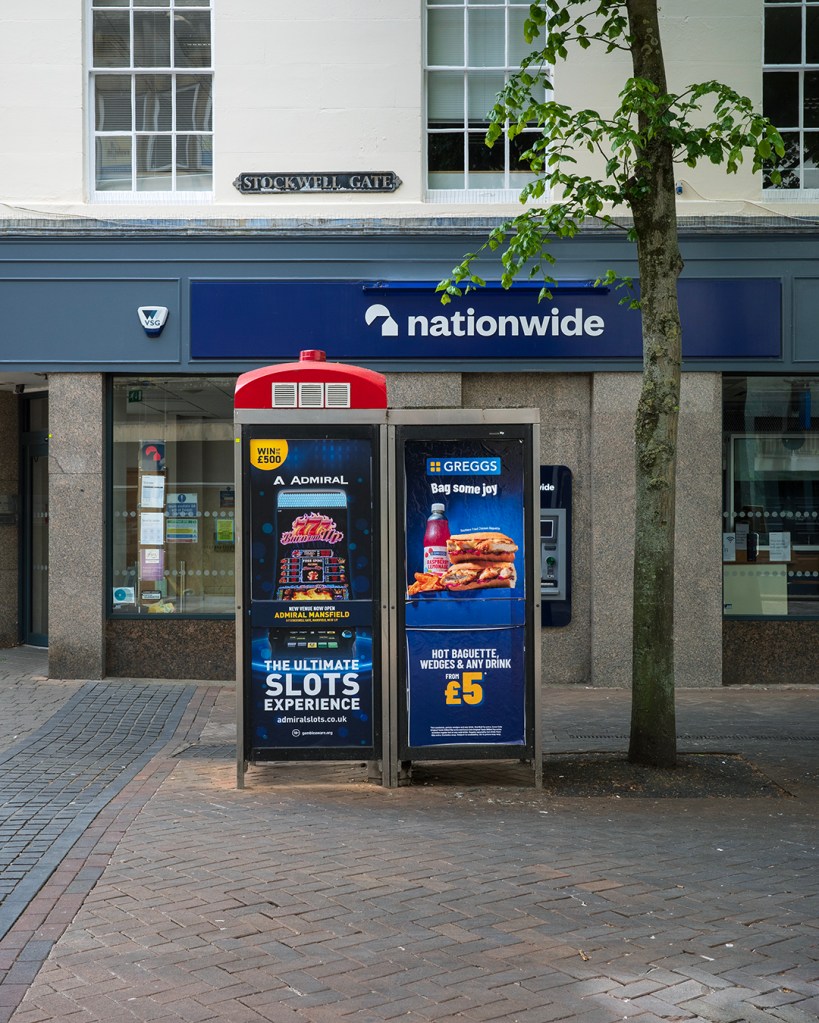
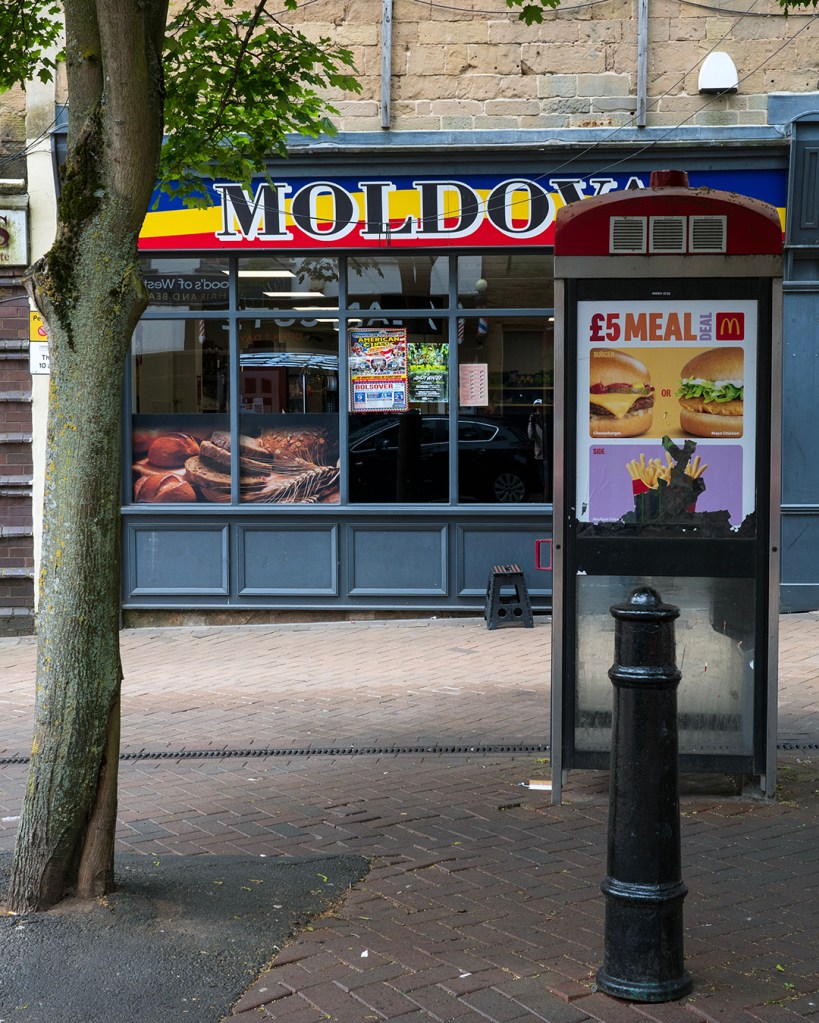
Some traditional high street shops remain—banks are still open along the thoroughfares, as is WH Smiths, although the recent news that they are closing their town centre stores may mean the buildings they vacate become more sites for gambling. Most of the big name stores seem to have retreated into the local shopping centre, the Four Seasons, like a collective act of disassociation—a safety in numbers where security guards patrol. While the record shop I used to visit on my lunch time escapes from school is now a bubble tea shop, whatever that is, little else seems to have changed in this sterile environment. The covered stores seem forever stuck in the 1980s, before the collapse of the local mining industry and the mass loss of jobs a decade later. Even the piped muzak sounded the same to my ears.
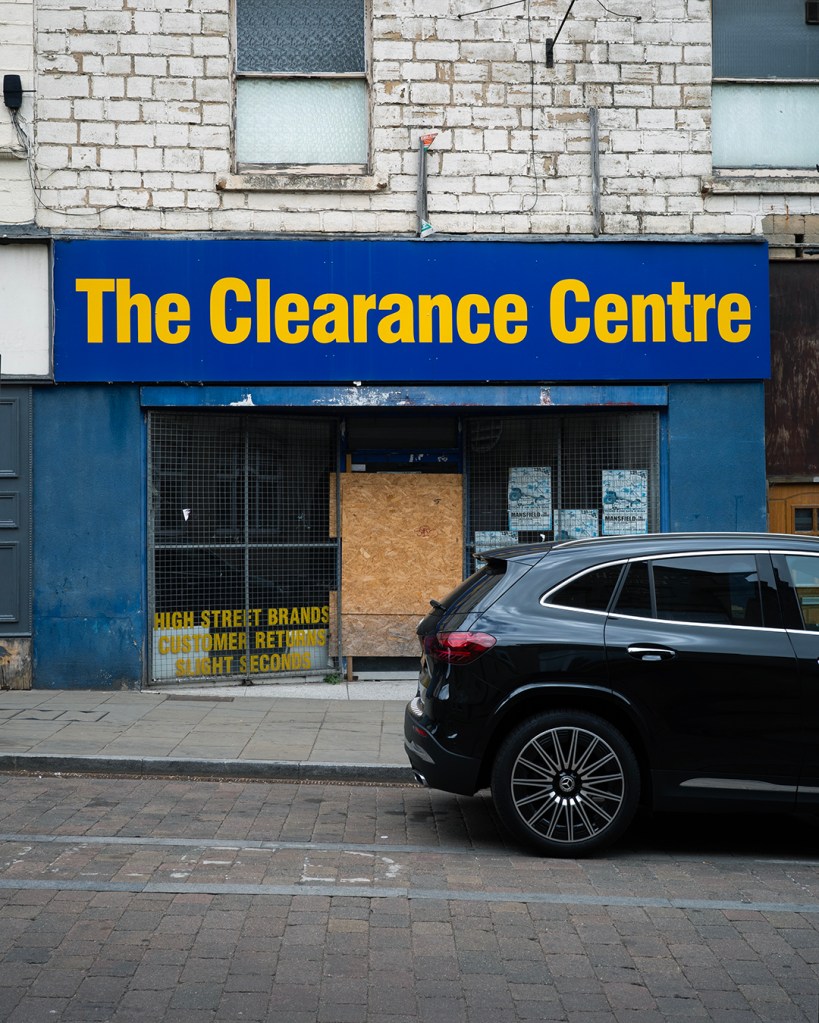
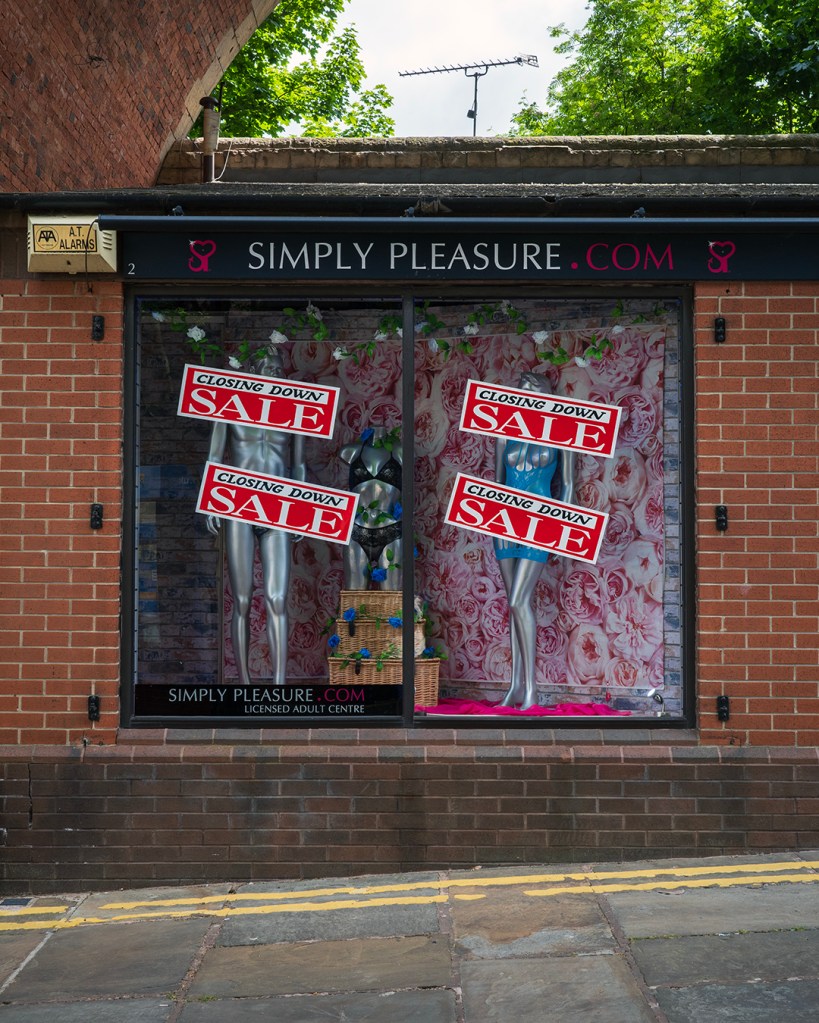
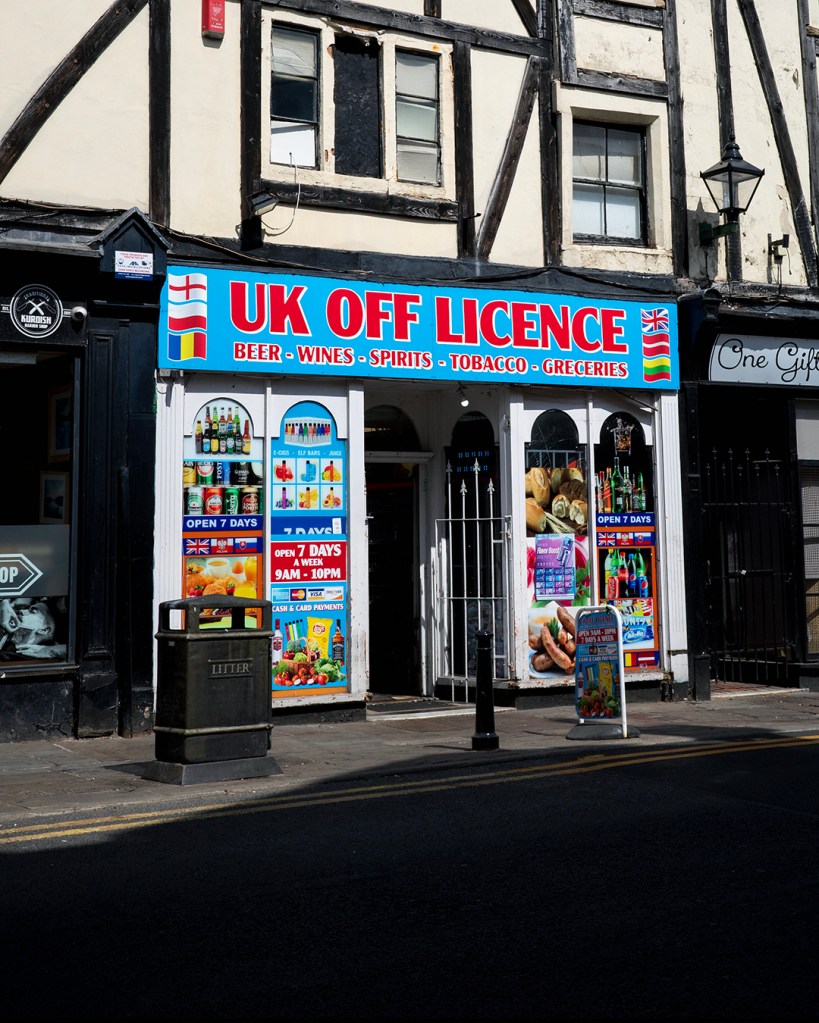
In 2012 Jonathan Meades wrote “It is a commonplace that streets in Britain seldom reveal their essence at ground level. This, as we know, is due to their disfigurement by signs, fascias, logos and brand marks of the mostly trashy shops which have homogenised the country, a tendency we have whiningly complained of for as long as anyone can recall, but which proceeds…”. And proceed it does, especially here. Mansfield sits in a lovely setting if you can look above, see the buildings, enjoy its thoroughfares in the sun, and head into the very centre. Different communities gather outside the shops they run, playing with their children and chatting with family and friends, bringing different cultures to the town. As such, there seems more joy and vibrancy in the air and in the streets than I remember there being here 40 years ago.
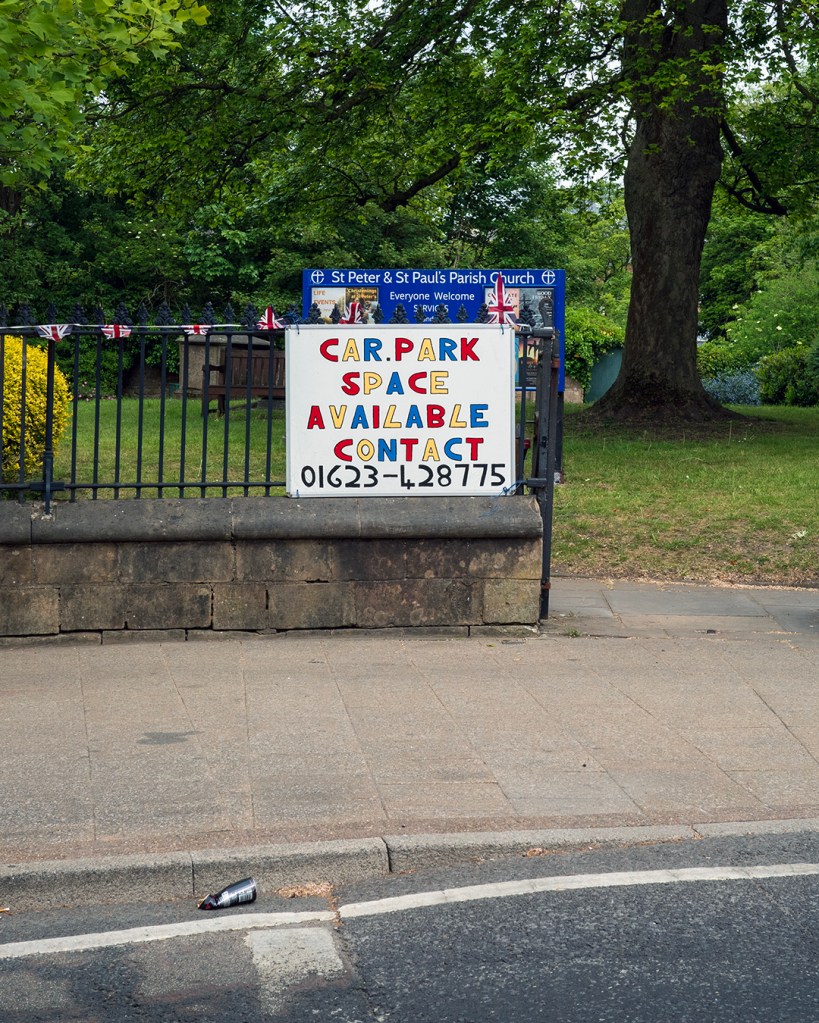
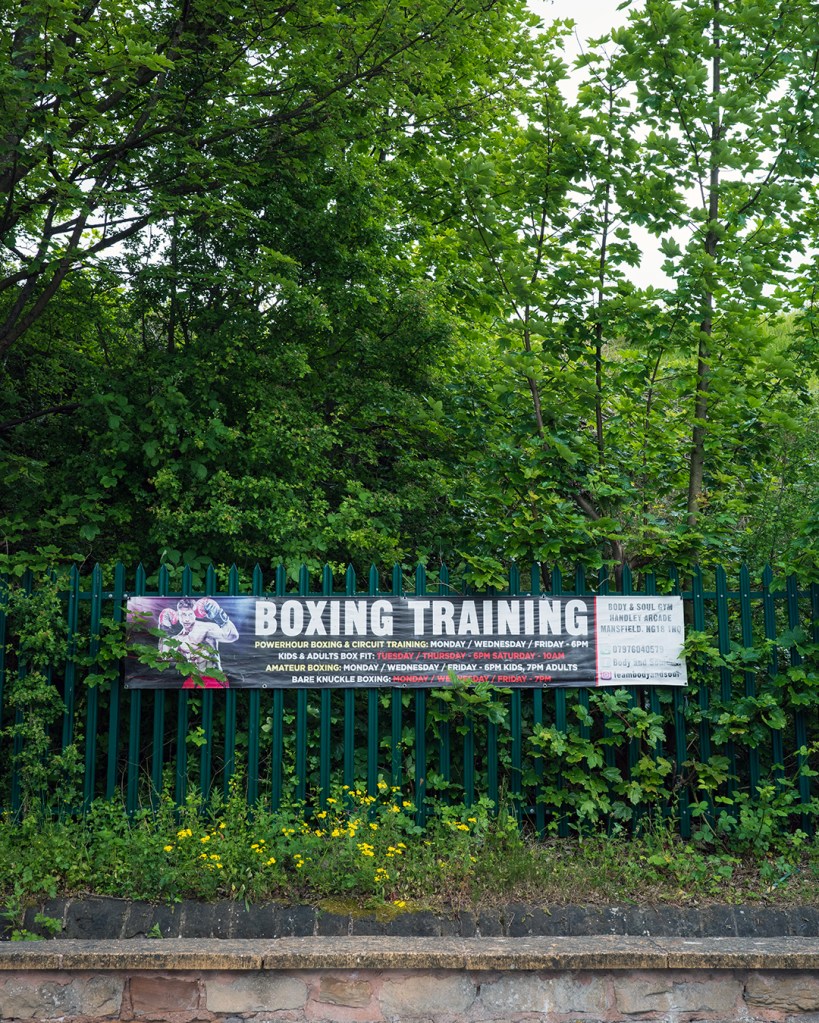
My dad, a Labour councillor in Kent before we moved to the Midlands, used to say they weighed the ballot papers in Mansfield rather than count them, it being such a Labour stronghold. It is a relief to discover this is still the case today; not because I have any affinity for Starmer and co, far from it, but because in neighbouring Ashfield the opportunist right-wing Lee Anderson, (ex-Labour, ex-Tory, now Reform UK), is the MP. Mansfield, with all its diversity seems to be holding Reform at bay, for now at least.
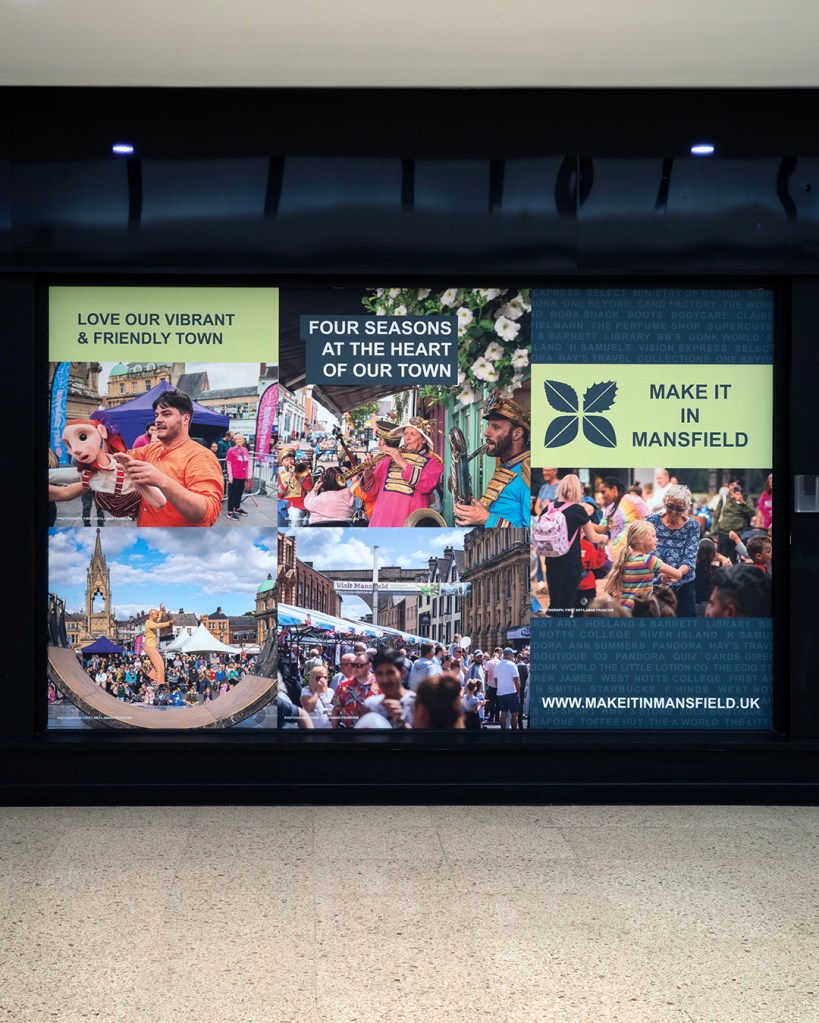
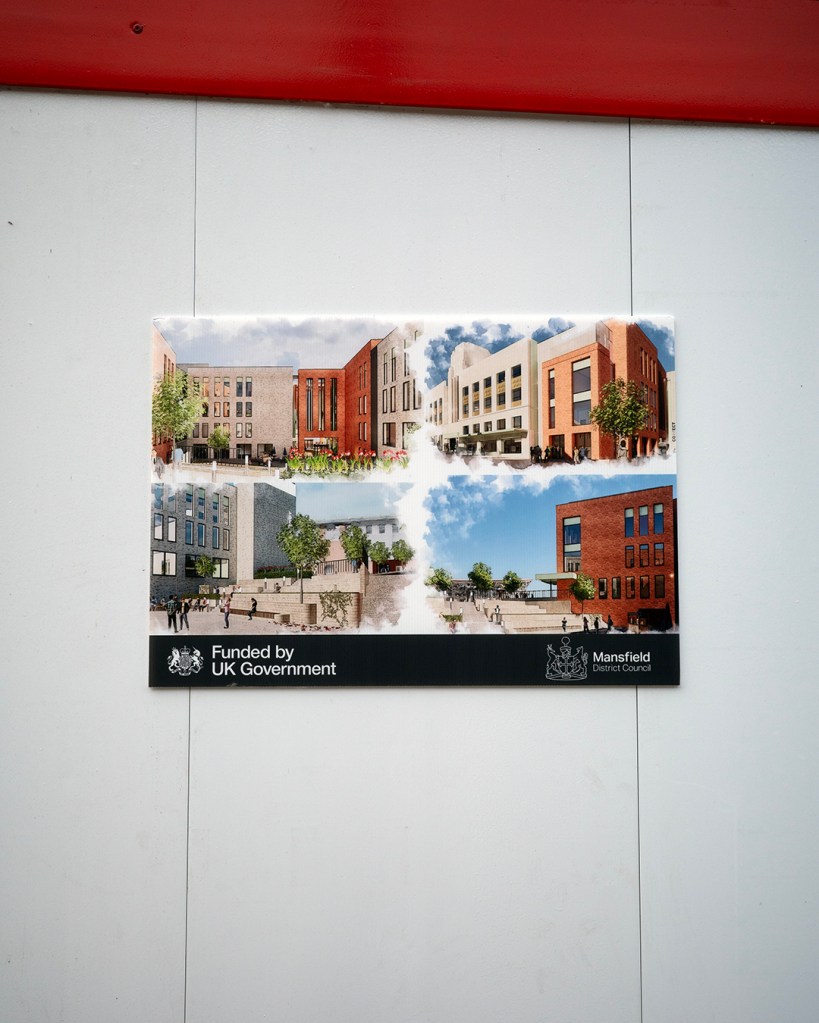
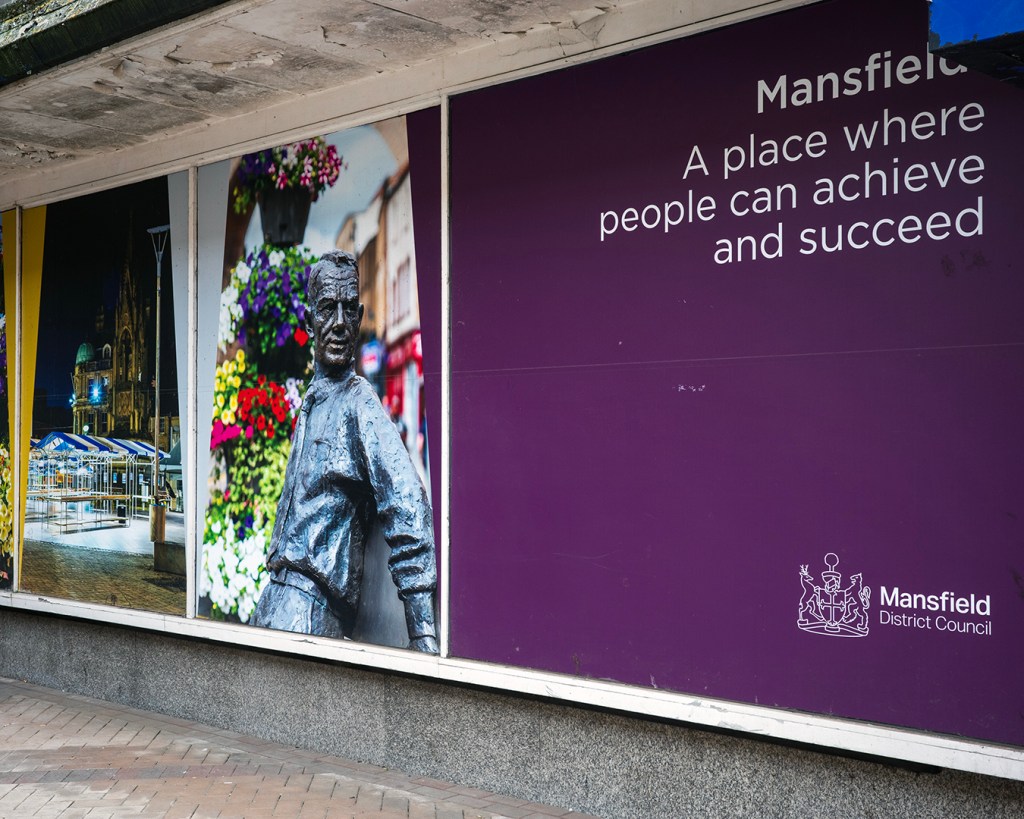
There is no denial here though—there are ‘We are neighbours’ banners hung around the town, visibly hinting at tensions under the surface that I couldn’t possibly see on this flying visit. These signals of affirmation were matched in their positivity by large hoardings promising that development is coming. A beautiful old art deco building, currently hidden at ground level behind a construction fence, is due to be turned into a “multi-agency and community hub” (2024, westbridgefordwire.com), saved with money from central government. There is a sense that those in power know there is work to be done, and between these two sentiments and a ‘Make It In Mansfield’ campaign, (2023, Mansfiled.gov.uk), visible in various locations across the town—this is fortune telling placemaking writ large. When I lived here, boys followed fathers down the mines if they didn’t escape to university, and there were few job prospects outside of the pit infrastructure. I was unemployed for eight months after dropping out of 6th form, before moving down south again in late 1985 to walk straight into a job after two weeks living in Colchester. While it is clear that Mansfield has been through a lot since I was last here 40 years ago, I left the town this time with a sense of hope for its future.
References
Bosson, B (2013) ‘Coal not Dole’: Mansfield in the Miners Strike Available: https://newhistories.sites.sheffield.ac.uk/volumes/2013-14/volume-5/issue-2-local-histories/coal-not-dole-mansfield-in-the-miners-strike Accessed: 1 June 2025
Davies, R and Goodier, M (2025) Slot machine firms target UK’s poorest areas and channel funds to billionaires Available at: https://www.theguardian.com/society/2025/may/18/slot-machine-firms-uk-poorest-areas-andy-burnham. Accessed: 1 June 2025
Hooker, L (2025) WH Smith name to disappear from High Street after sale Available at: https://www.bbc.co.uk/news/articles/cj3n3en7gppo Accessed: 1 June 2025
Mansfield.gov.uk (2023) Make It In Mansfield Available at: https://www.mansfield.gov.uk/makeitinmansfield/ Accessed: 1 June 2025
Meades, J (2012) Museum Without Walls Unbound
West Bridgeford Wire (2024) £30 million transformation of Nottinghamshire former department store a step closer Available: https://westbridgfordwire.com/30-million-transformation-of-nottinghamshire-former-department-store-a-step-closer/ Accessed: 1 June 2025
 Nigel Ball
You must be logged in to post a comment.