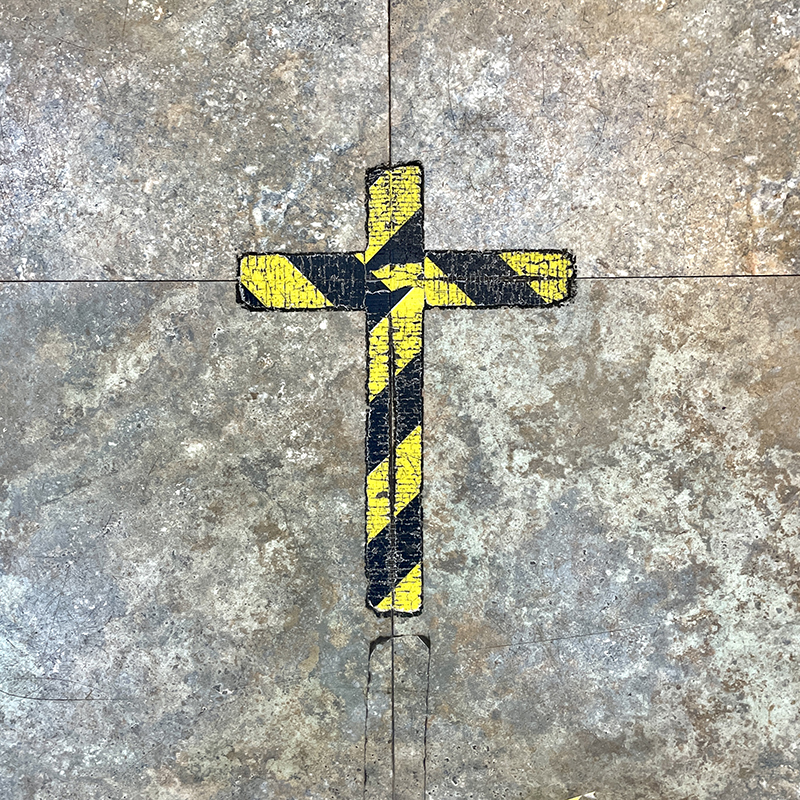
I found this tape in the shape of a cross on the floor of a Waitrose store at an M1 service station last weekend. Such yellow and black tape is typically synonymous as a health & safety hazard warning for when a surface is unsafe, and used “for excavation, trip hazards, low hanging objects and material storage”, according to IrwinSafety.com.
This type of warning system was not initially used as a health & safety signal though, but by police in the United States in the 1960s to mark out crime scenes, so claims LabelSource.co.uk. It was deemed “an eye-catching, provocative design…”, and sent a “clear, concise message”. However, in the UK, police predominantly adopted blue and white tape, (alongside other colours), and instead yellow and black has mainly been used to warn of a potential danger, whether that be because of some sort of maintenance happening, or to alert people of steps or other obstacles. The latter is often telling of the poor accessibility awareness in UK planning, and applied after something has been built, rather than hazards factored in and mitigated against at the design stage of a project.
Recently in the UK though, we have more commonly come to see such tape used to mark out social distancing zones in shops as part of the public health measures put in place during the Covid-19 pandemic. I am certain the example I found in the service station is a remnant of just that.
Looking at the photograph later that day it struck me how the shape of the cross was particularly poignant given the cost to human life of the disaster. There are still many traces of social distancing tape left on shop floors all over the country, and these leftovers from our recent lived experience have almost become symbols of a past heritage, mimicking how English Heritage or The National Trust might display the lives of past generations to visitors from the present. Depending on your view on the UK government’s handling of the crisis, these remnants could also be seen as a fitting metaphor for the then prime minister, Boris Johnson, all scuffed and grubby round the edges and not serving any real purpose any more, as much as a reminder of lives upturned and lost because of the mistakes of an administration wholly unprepared.
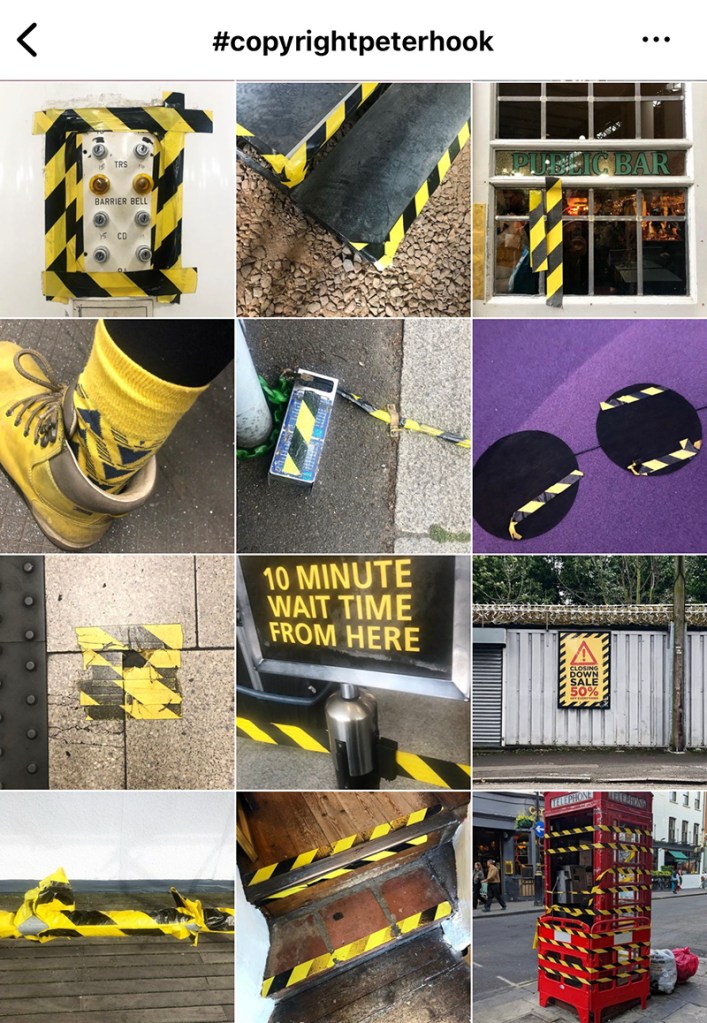
There are other, pre-pandemic, ironic readings of uses of yellow and black tape though, with the popular social media hashtag #CopyrightPeterHook accompanying photographs of the over-abundance of such on Instagram. Coined in honour of the ex-New Order and Joy Division bassist, Peter Hook bought up the ownership of the Hacienda brand, and according to Unherd.com, has “successfully commercialised it.” Yellow and black stripes were liberally used throughout the Manchester based Haçienda club as part of its core aesthetic. Designed by Ben Kelly, who Peter Saville bought in to design the interior of the club, its use visually referenced the industrial themed look of flyers Saville created for Factory Records. Given the rift between Peter Hook and his previous band mates, and the lawsuit they settled in 2017 about who owned the rights to their music and band names, a joke about claiming the copyright on yellow and black hazard stripes on the back of Hook owning brand Hacienda, is a graphic designer’s one to have.
 Nigel Ball
You must be logged in to post a comment.